

School Workspace Planning
Unplanned rooms waste budgets and discourage students from experimenting. Good planning begins with a site study covering floor area, power points, ventilation, storage and student strength. We map zones for electronics, fabrication, computing and display, so movement stays safe and organised. Layouts follow grade-wise usage, allowing learners to work in small teams.
Management receives a visual floor plan and a phased timeline before any purchase begins. This careful groundwork keeps spending predictable, avoids rework and gives the school an inviting workspace that students actually want to enter.
Consult NowTamil Nadu Vendor Guide
Choosing a supplier without checking experience often brings delayed delivery and weak support. For an ATAL Tinkering Lab in India, compare vendors on field history, installation team, training quality, spare-part availability and written warranty terms. Propeller Technologies, working from Tiruchirappalli, Tamil Nadu, brings over nine years of school project experience, direct engineer visits and documented handover.
Ask every vendor for sample layouts, references and itemised quotations. Visiting a completed lab and speaking with its teachers reveals more than any brochure and helps management decide with confidence.


ATAL Equipment List Explained
Confusion over what to buy leads schools to overspend on unused gadgets. A balanced ATL equipment list usually covers:
- Electronics components, breadboards, multimeters and soldering tools for circuit building.
- Open-source microcontroller boards, sensors and actuators for physical computing.
- Robotics and do-it-yourself kits for mechanical projects.
- 3D printers with filament for rapid prototyping.
- Hand tools, safety gear and a first-aid box.
- Computers or laptops for design and coding.
We compare your needs with current AIM guidance, then record purpose and quantity for every item before finalising.
Contact NowATAL Packages

Package - 1
Electronics Development Robotics Internet of Things Sensor.

Package - 2
Rapid Prototyping Tools (3D Printing and Filaments).

Package - 3
Mechanical Tools Electrical Tools Measurement Tools.

Package - 4
Power Supply Accessories and Safety Equipment's.

ATAL Tinkering Lab in India
Many parents and principals hear about innovation labs but cannot picture daily activity. An Atal Tinkering Lab is a school workspace under NITI Aayog’s Atal Innovation Mission, designed to build curiosity, design thinking and computational skills through hands-on projects. Students work with electronics, robotics kits, sensors and 3D printers instead of memorising definitions. Eligibility and application windows are decided by AIM, which selects schools itself. Our role is practical: we assist with planning, documentation and setup, helping institutions prepare properly for grant-supported or self-funded projects.
Transforming Students Into Innovators

The lab strengthens students’ knowledge in science, technology, engineering and mathematics through interactive learning.
Students engage with real tools, kits and technologies that build practical problem-solving skills for future innovation.
Students learn using modern tools and tech, gaining skills for future innovation-driven careers in emerging industries.
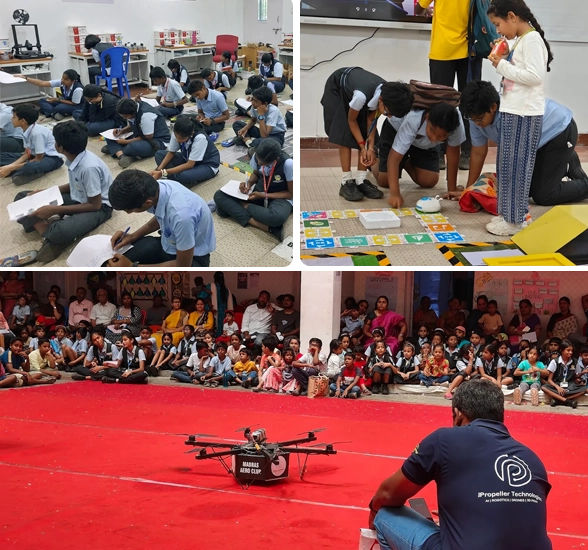
Students explore AI and robotics through hands-on projects, boosting creativity, problem-solving and innovation.
Setup Cost Breakdown
Unclear pricing makes budget approval slow and stressful. Final cost depends on several factors:
- Room size and furniture requirements.
- Student strength and number of workstations.
- Selected modules, from basic electronics to advanced robotics.
- Installation, training and maintenance scope.
Recent AIM programmes have offered grants up to Rs 20 lakh per selected school, yet terms change, so confirm on the official portal. We provide an itemised estimate for self-funded or grant-supported projects, listing every component, so management can compare options side by side.
Contact Now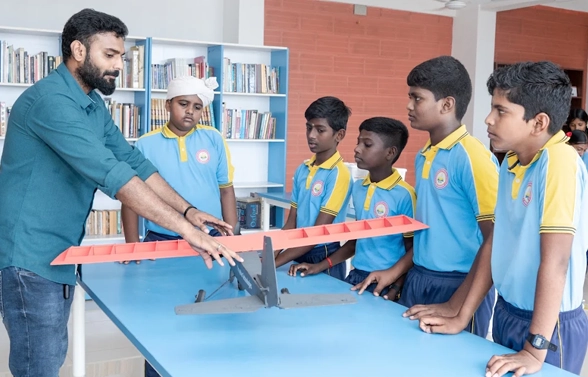
Young Inventors Makerspace
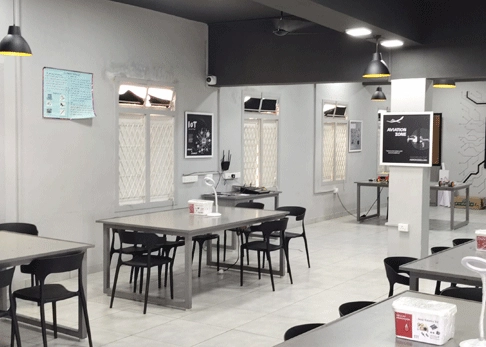
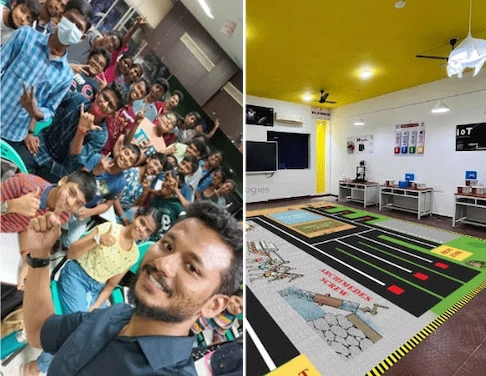
Quiet corners in many schools remain unused while students lose interest in rote lessons. A makerspace room changes that by offering open tables, craft materials, tools and project shelves where ideas move from sketches to prototypes. Young inventors test, fail, redesign and try again, building resilience along with technical skill.
Younger children enjoy simple builds, while senior students attempt sensor-based solutions to local problems such as water monitoring or waste sorting. Display boards celebrate finished work, encouraging classmates to join and parents to appreciate progress.
Get Quotation Today
Waiting for scattered quotes delays decisions and planning. A single written proposal saves weeks of follow-up and confusion. Share your room size, student strength, grade levels and approximate budget through our enquiry form or phone line, and our team will schedule a campus visit.
You then receive a clear document covering layout, equipment list, installation plan, training schedule and maintenance terms. There is no obligation to proceed, so management can review calmly, consult governing members and compare alternatives before taking the next step.

Institution Documentation Support
Paperwork errors can sink an otherwise strong application. Eligibility is set by AIM and has generally covered schools from Grade VI to X managed by government bodies, local authorities or private societies, so always verify current rules on the official portal.
We help institutions gather registration records, infrastructure details, space photographs and equipment lists in the required format. Our team prepares utilisation records and photo documentation after installation. We never promise selection, because decisions rest with the Atal Innovation Mission; we make your submission clear, complete and organised.

Electronics Kits and Sensor Modules
Students struggle to grasp circuits when components stay locked in cupboards. Our electronics kits include LEDs, resistors, breadboards, motors, buzzers and jumper wires, supporting experiments from simple switches to automatic lighting. Sensor modules measure temperature, light, distance, humidity, sound and motion, letting learners collect real data and respond with code.
Each kit is organised in labelled trays, so teachers can issue and recover parts quickly. Activity cards guide beginners step by step, while advanced challenges encourage students to modify circuits, document readings and explain results to classmates.
3D Printers Drones Coding Boards
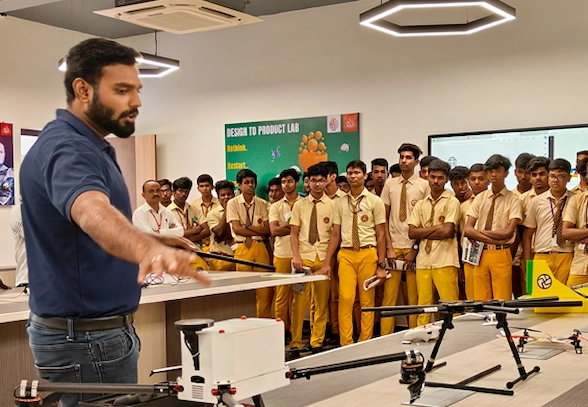
Ideas stay on paper when students cannot turn them into physical objects. A 3D printer lets learners design parts in free software, print them and refine fit through repeated testing. Drone kits introduce flight principles, balance and safe operation under teacher supervision.
Coding boards such as Arduino-compatible controllers connect sensors to programs, teaching logic, loops and automation. Together these tools support projects like smart plant monitors, obstacle-avoiding vehicles and custom casings. Clear safety rules, trained supervision and designated usage slots keep sessions productive, secure and fair for every class.
Teacher Training Program
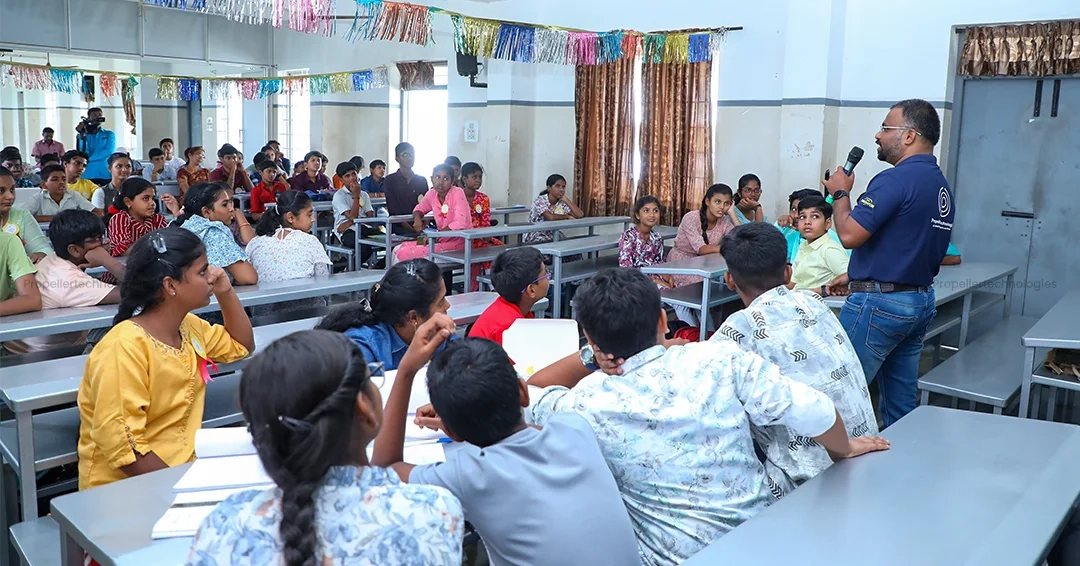
Teachers hesitate to run sessions with unfamiliar tools and unused labs follow. Our onboarding workshops let educators build circuits, program boards and operate printers before students arrive. Each participant receives lesson plans, safety checklists, activity guides and short video tutorials mapped to grade levels.
Our lead trainers, guided by Mr. Aashik Rahman, shape the framework using classroom experience from many school projects. Follow-up visits and phone support help staff clear doubts, plan timetables and assess student progress, so sessions continue confidently long after launch day.
Annual Maintenance Plan
Equipment failures after installation can pause learning for weeks. Propeller Technologies, serving schools from Tiruchirappalli, Tamil Nadu, schedules periodic maintenance visits to check boards, sensors, printers and wiring, replace worn parts and update software. Consumables such as filament, batteries and jumper wires can be reordered through simple requests.
Each visit ends with a short report for the principal. Over nine years we have learned that regular care keeps an ATAL Tinkering Lab in India active long after inauguration, protecting the investment and student enthusiasm.

Frequently Asked Questions
How much will an ATL lab cost?
Cost depends on room size, student strength and modules; we provide itemised written quotations.
What equipment does Atal guidance require?
Guidance lists electronics, sensors, robotics kits, 3D printers, tools and computers; we share checklists.
Which schools qualify for grant funding?
Eligibility is set by AIM, generally Grade VI to X schools; verify current rules.
Is online registration open currently?
Windows open periodically; check the official AIM portal, and we guide documentation preparation.
Do vendors provide teacher training?
Yes, our workshops, manuals and follow-up visits prepare teachers without technical backgrounds.